Keeping your car clean is not just about looks. It affects your health, comfort, and driving experience, too. Many car owners deal with persistent bad smells, mold, or bacteria inside their vehicles. Using car mold removal ozone UV-C treatment, professionals can eliminate deep contamination from both the air and surfaces, providing a cleaner, safer, and fresher car interior.
The Hidden Problem Inside Car Interiors
Car interiors may look clean, but they can hide serious problems. Over time, moisture, food spills, smoke, and daily use create the perfect environment for bacteria and mold spores to grow.
Common causes include:
- Water leaks or damp carpets
- Food and drink spills
- Pet hair and odor
- Smoke buildup
- AC system moisture
These issues can lead to:
- Musty smells
- Mold growth
- Poor air quality
- Health concerns like allergies
This is why basic cleaning is often not enough.
Why Basic Interior Cleaning Is Not Enough
Many people think vacuuming or shampooing is enough to clean a car’s interior. However, these methods only remove surface-level dirt.
- Vacuuming removes visible dust but not bacteria
- Shampooing cleans fabric but does not fully disinfect it
- Odor can return if the source is still present
To fully remove contamination, deeper car interior sanitization methods are required.
What Ozone Treatment Does Well
Ozone treatment is widely used for removing car odors and purifying the air. It works by releasing ozone, which breaks down odor-causing molecules at a chemical level.
Benefits of ozone treatment:
- Reaches deep into fabrics and air vents
- Removes smoke and pet odors
- Breaks down bacteria in the air
- Improves overall air quality
If you want a detailed guide, read our complete guide on ozone treatment for cars in San Mateo.
However, ozone is not a complete solution on its own.
Where Ozone Treatment Falls Short
While ozone is effective in removing odors, it has some limitations when it comes to full sanitization.
Limitations include:
- It mainly works in the air, not fully on surfaces
- Some mold spores can survive
- Bacteria on car interior surfaces may remain
- Recontamination can happen over time
This means odor may come back if the root cause is not fully removed.
How UV-C Light Treatment Works in Car Interiors
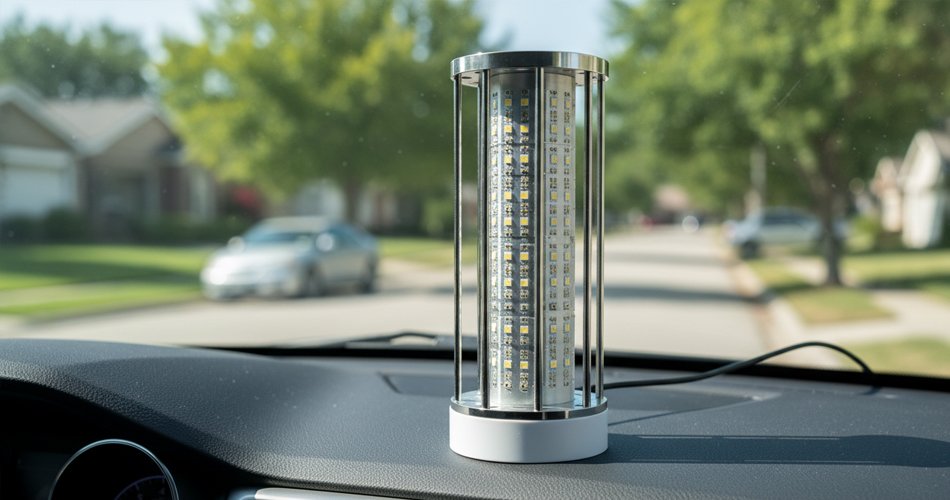
UV-C light treatment is a powerful method used to kill bacteria and microorganisms on surfaces.
It works by:
- Destroying the DNA of bacteria and mold spores
- Stopping microorganisms from growing
- Providing instant surface-level disinfection
UV-C light is widely used in medical and controlled environments because of its ability to reduce microbial contamination effectively. This makes it a reliable technology for advanced car interior sanitization.
Ozone vs UV-C Light: What’s the Difference?
Both methods are powerful, but they work differently.
- Ozone works in the air and reaches hidden areas
- UV-C light works on exposed surfaces
Ozone is ideal for:
- Air purification
- Odor removal
UV-C light is ideal for:
- Surface sterilization
- Killing bacteria instantly
Why Combining Ozone and UV-C Gives Better Results
Using ozone and UV-C light together creates a complete sanitization system.
This combination works because:
- Ozone penetrates deep into fabrics and air vents
- UV-C light disinfects surfaces like seats, dashboards, and carpets
Together, they:
- Remove odors permanently
- Kill bacteria and mold spores
- Improve interior air quality
- Reduce the chance of odor returning
This is considered an advanced car interior sanitization approach.
Does Ozone Really Kill Mold Spores in Cars?
Ozone can help reduce mold spores, but it may not eliminate them on its own.
Mold spores can:
- Hide deep in seat cushions and upholstery
- Stick to surfaces
- Survive if not fully treated
That’s why combining ozone with UV-C light provides better and longer-lasting results.
Benefits of Ozone and UV-C Car Treatment
Using both technologies offers several advantages:
- Deep odor removal instead of masking
- Better air quality inside the car
- Effective bacteria and mold removal
- Long-lasting cleanliness
- Safer environment for passengers
This is especially useful for people who:
- Drive daily
- Have kids or pets
- Use their car for rideshare services
When You Should Consider This Treatment
You should consider ozone and UV-C treatment if you notice:
- Strong bad smell in your car
- Musty or moldy odor
- Smoke smell that won’t go away
- Recent water damage
- Allergy symptoms while driving
These signs often mean deeper contamination inside the vehicle.
Why Air Fresheners and Sprays Don’t Work
Many people try to remove bad smells from car interiors using sprays or air fresheners.
However:
- They only mask the smell
- They do not kill bacteria
- The odor returns after some time
Real odor removal requires eliminating the source, not covering it.
Professional vs DIY Ozone Treatment
Some people try DIY ozone machines, but professional treatment is more reliable.
Professional service ensures:
- Proper ozone levels
- Safe handling
- Complete interior coverage
- Use of both ozone and UV-C technology
At Bay Area Auto Detailing, advanced tools like ozone generators and UV-C light systems are used to improve interior air quality and remove contamination more effectively.
Ozone and UV-C Car Treatment in San Mateo, CA
In areas like San Mateo, moisture and a coastal climate can increase the chances of mold growth inside vehicles.
Regular use, combined with environmental factors, can lead to:
- Damp interiors
- Hidden mold growth
- Persistent odors
Advanced car interior sanitization methods can help reduce these risks and keep your car interior fresh.
Real Situations Where This Treatment Helps
This treatment is especially useful in real-life situations such as:
- After rainwater or flooding
- Smoke odor from cigarettes
- Food spills left for a long time
- Pet-related odors
- Cars stored for long periods
These situations often require more than basic cleaning.
FAQs
Does ozone remove mold from cars?
Ozone can reduce mold spores, but it may not fully eliminate them without additional treatment like UV-C light.
Is UV-C light safe for car interiors?
Yes, when used properly, UV-C light is safe and effective for surface disinfection.
How long does ozone and UV-C treatment take?
The process usually takes a few hours, depending on the level of contamination.
Can bacteria live inside car seats?
Yes, bacteria can grow in fabric, foam, and carpets, especially in moist conditions.
What is the best way to remove bad smells from a car?
The best method is to eliminate the source using advanced treatments like ozone and UV-C sanitization instead of masking the odor.
Final Insight
Car interior cleaning is no longer just about vacuuming and wiping surfaces. Modern problems require modern solutions.
Ozone treatment is a powerful first step, but combining it with UV-C light creates a more complete and effective sanitization process. This approach helps remove not only odors but also the hidden bacteria and mold spores that cause them.
By understanding how these technologies work together, car owners can make better decisions to maintain a cleaner, safer, and more comfortable driving environment.